
USB Cables Price Comparison
Looking for a USB Cables? MagicPrices compares 32 offers for you. Filter by price or choose a brand below to find the best deal.
USB Cables price comparison UK


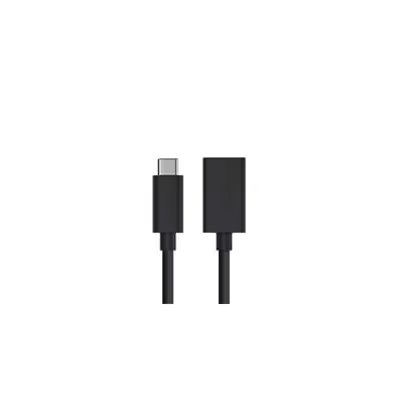




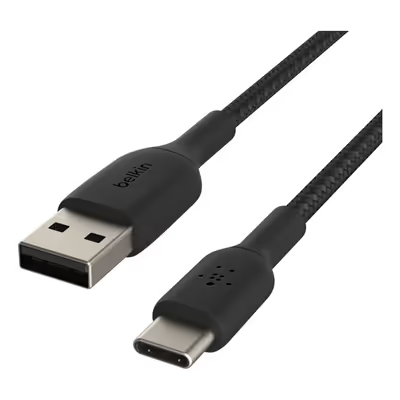


USB Cables: connect, charge and sync with confidence
USB cables are the everyday link between your devices, from phones and tablets to hard drives and hubs. Choosing the right connector (USB‑C, USB‑A or Micro‑USB), the correct speed rating (USB 2.0, USB 3.2 or USB4) and a cable built for durability helps you move files faster and power devices safely. For UK buyers, getting the best balance of price and performance starts with matching your device port and use‑case. If you need mains leads for your setup, pair your USB lead with reliable Power Cables, and keep your desk tidy with practical Cable Accessories.
Why choose the right USB cable (benefits and use‑cases)
The right cable improves day‑to‑day reliability: faster data transfer for backups and external drives, stable Android Auto connections in the car, and efficient charging for phones, tablets and accessories. A quality USB‑C cable with adequate power delivery support can reduce charging times, while a well‑shielded, properly rated data cable minimises drop‑outs during large file copies. Length matters too: short leads help declutter portable setups; 2–3m cables bring flexibility to living rooms and offices. Materials make a difference—braided exteriors add toughness for travel, while compact, right‑angle plugs help where space is tight. Thoughtful choices mean fewer replacements and better long‑term value.
Explore the USB cables range
From everyday charging to high‑bandwidth tasks, the selection spans USB‑C to USB‑C for modern phones and laptops, USB‑A to USB‑C for legacy ports, and USB‑A to Micro‑USB for small devices and accessories. Speed options cover USB 2.0 for simple charging/sync, USB 3.2 for faster transfers to external storage, and USB4 for next‑gen throughput. You will also find cables in multiple lengths, slim or braided finishes, as well as right‑angle designs for tight spaces. If your setup extends into displays or pro workflows, consider adjacent categories such as Thunderbolt or display interconnects in the See also section below. For iPhone/iPad users, the dedicated Lightning category is the best place to look when you need the matching connector.
See also
- Wire Connectors
- Power Cables
- Networking Cables
- Coaxial Cables
- InfiniBand & Fibre Optic Cables
- Ribbon Cables
- SCSI Cables
- USB Cables
- SATA Cables
- FireWire Cables
- Signal Cables
- KVM Cables
- PS/2 Cables
- Cable Gender Changers
- Serial Attached SCSI (SAS) Cables
- Cable Splitters or Combiners
- Parallel Cables
- Serial Cables
- Thunderbolt Cables
- Fibre Optic Adapters
- Audio Cables
- HDMI Cables
- DVI Cables
- VGA Cables
- S-Video Cables
- Composite Video Cables
- DisplayPort Cables
- Video Cable Adapters
- Internal Power Cables
- Fibre Optic Connectors
- Lightning Cables
- Cable Accessories
- Internal USB Cables
USB Cables: FAQ
Which USB cable do I need: USB‑C, Micro‑USB or USB‑A?
Check the device port: most newer phones, tablets and laptops use USB‑C; many older accessories use Micro‑USB; peripherals and PCs often provide USB‑A. Match both ends (e.g., USB‑C to USB‑C, or USB‑A to USB‑C) to avoid adapters and ensure the best performance.
USB 2.0 vs USB 3.2 vs USB4: which should I choose?
Use USB 2.0 for basic charging and simple sync. Choose USB 3.2 for faster data transfers to external drives and hubs. Opt for USB4 when you need cutting‑edge bandwidth and advanced capabilities on supported devices. Your device and port standard must also support the higher speed to benefit.
How can I get the best price (meilleur prix) on USB‑C cables in the UK?
Focus on essentials: correct connectors, adequate speed, and power delivery rating for your devices. Compare offers across lengths and finishes; braided options can be cost‑effective over time thanks to durability. Buying only the spec you need keeps the price down while maintaining reliability.
Are cheap (pas cher) USB‑C cables safe for fast charging?
Yes—if they're properly rated and built to standard. Look for clear power delivery specifications and robust strain relief. Avoid unlabelled or visibly flimsy cables. When in doubt, choose a cable from a reputable source and keep an eye on heat during first use.
What length should I pick for charging and data?
Short (0.3–1m) is ideal for power banks and desks; 1–2m suits bedside or office use; 3m adds flexibility across rooms. Longer cables may reduce charging efficiency slightly; choose a heavier‑gauge lead if you need extra length.
What's the difference between USB‑C and Thunderbolt cables?
All Thunderbolt cables use the USB‑C connector but support additional features and higher data rates on compatible hardware. If you only need charging and standard data, a USB‑C cable is sufficient; for pro‑level bandwidth and display daisy‑chaining, check the Thunderbolt category in the See also section.
Are braided USB cables more durable than standard PVC?
Braided exteriors generally improve abrasion resistance and reduce tangles, making them good for travel and daily wear. Standard PVC can be lighter and more flexible for tight spaces. Pick based on usage: portability and toughness vs compact flexibility.